Navigate Through Our History
Memorial
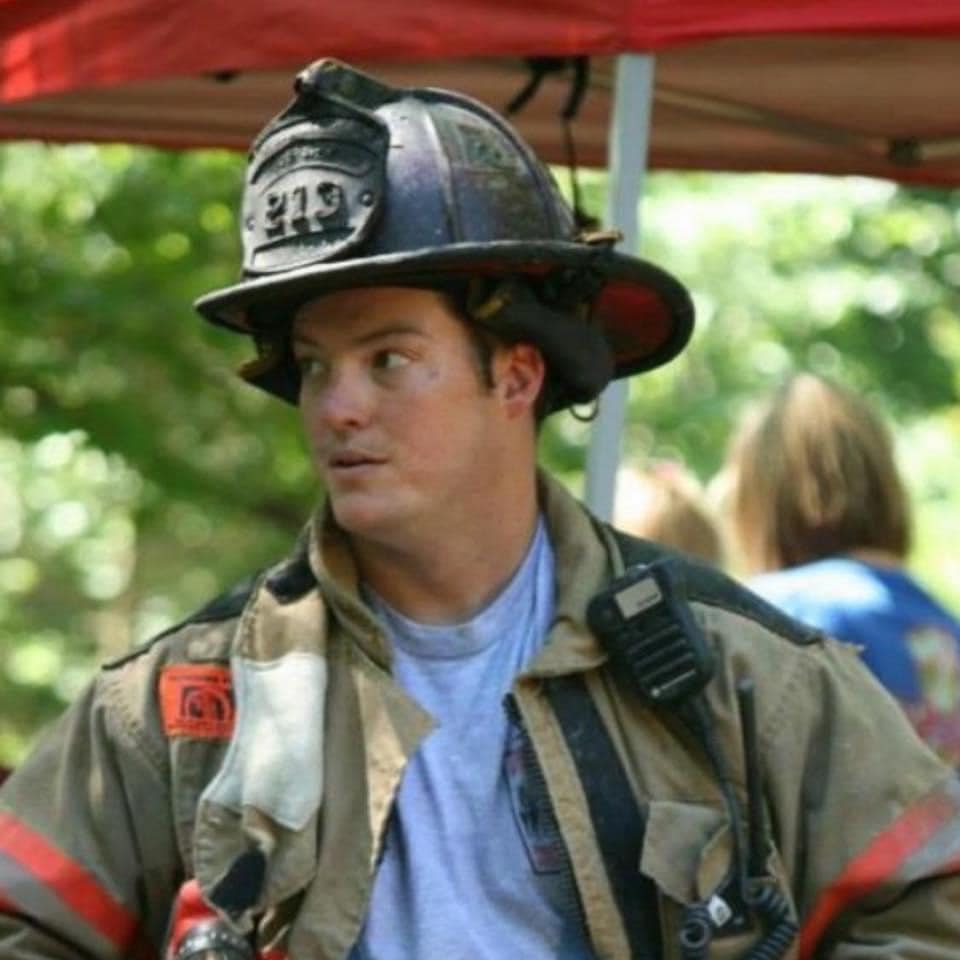
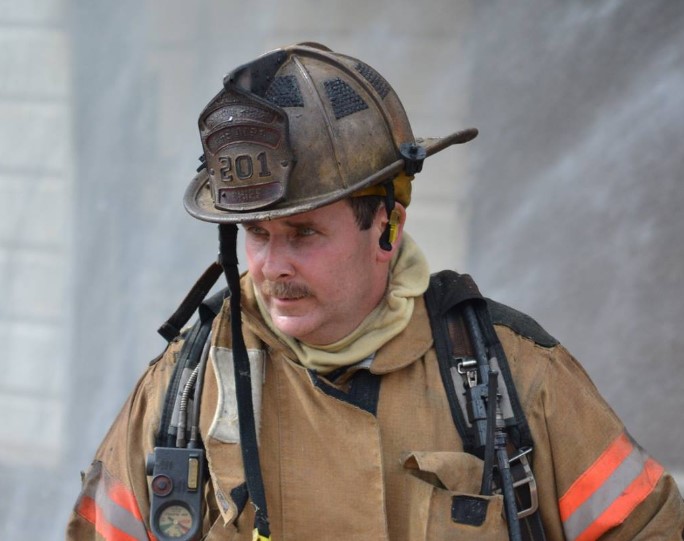
Jeffrey "Stan" Newton Holden
Assistant Chief
August 13, 2018
Assistant Chief Jeff "Stan" Holden dedicated his life to serving the Orange Rural Fire Department and the community of Hillsborough. His commitment to excellence, leadership, and mentorship touched the lives of countless firefighters and community members. Stan's legacy lives on through the many lives he saved, the firefighters he trained, and the unwavering standard of service he established.
Nihil est simul et inventum et perfectum • Nothing is simultaneously both conceived and perfected
We remember their sacrifice • We honor their service • We carry on their mission.
History of the Fire Service in Hillsborough
Prior to 1937
The town of Hillsborough, NC has a very rich history dating back to 1754. Equally as rich is the history of the fire department in Hillsborough. Before any organized fire department, the citizens of the town banded together to fight fires. Many of the buildings in the business district were wood frame structures throughout the 1800's and early 1900's and large fires were prevalent. At the time, the fires were fought with bucket brigades and all the citizens got involved. In the words of
Sue Hayes, a long-time resident of Hillsborough, "Some people brought their own buckets, and any merchant who had buckets for sale contributed his entire stock. The wonderful town pump was the only source of water and it worked continuously". At one point, there were fire buckets and ladders owned by the town to be used by the bucket brigades to fight fires.
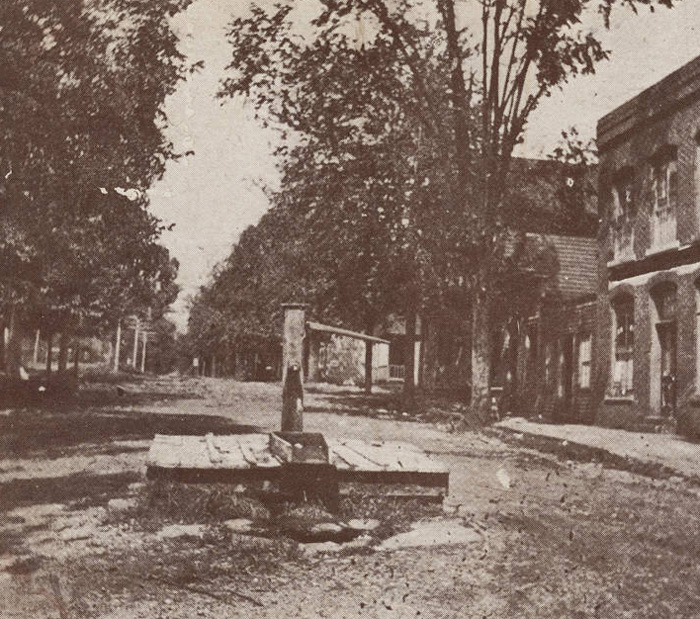
The Town Pump circa 1914
Timeline
1790
Fire of 1790 March 1790 (or possibly late 1789): Major fire damaged Orange County Courthouse, requiring complete rebuilding. Old Anglican Church, then serving as school house and meeting place, also believed damaged in same incident. Fire destroyed valuable early colonial and Revolutionary War period records in courthouse register, creating permanent gaps in Orange County historical documentation. This early catastrophic fire demonstrated need for fire prevention measures, contributing to later establishment of town-owned firefighting equipment (1848) and eventual creation of organized fire department (1937).
1888
Great Fire of 1888December 1888: Devastating fire originated in Postmaster building and destroyed entire southwest block of Churton at King Street - the heart of Hillsborough's downtown business district. Town's primitive bucket brigade system and single town pump proved completely inadequate against the spreading blaze. Multiple businesses and structures lost in what became one of the most destructive fires in town history.
1903
Depot FireFire destroyed Southern Railway depot building and freight stored within. The depot served as crucial transportation and economic hub for Hillsborough, handling both passenger and freight operations for the Southern Railway system. Loss of structure and cargo represented significant economic impact on community. Town's bucket brigade system and single water pump again proved inadequate against major structural fire.
1920
Farmers Union FireFire destroyed Farmers Union building and several other buildings in business district. First documented mutual aid response to Hillsborough - Durham Fire Department responded with motorized equipment, demonstrating organized fire department's capabilities versus Hillsborough's bucket brigade system.
1921
Major fire destroyed Forest Building and spread to several other buildings, causing $30,000 damage (equivalent to ~$465,000 today). Massive financial loss for small town demonstrated continued vulnerability of bucket brigade system and town pump to control spreading fires. Fire directly contributed to
building boom beginning June 1921 as community rebuilt damaged structures.
1936-1949: The Beginning
Hillsborough did not have an organized department until 1937. As the country struggled to recover from the Great Depression, President Roosevelt enacted his New Deal Program of 1933. Part of the program was the Public Works Administration which built large-scale public works such as dams, bridges, water & sewer systems, etc. The town of Hillsboro benefitted from the PWA projects with the construction of a water system to replace the old town pump. With the constructions of a new water plant, water lines, and hydrants; money from the project was also used to fund a fire truck with the creation of the Hillsboro Fire Dept. A 1937 Chevrolet American LeFrance was purchased from Eno Chevrolet of Hillsboro. With limited resources, the new fire truck was kept in the garage of Eno Chevrolet which served as the first fire station for the next 10 years. It is said that the truck was kept in the garage at night and pulled out each day to allow the garage to conduct business. An electric siren was also purchased and kept outside the garage to alert the town of a fire. The siren was controlled by the phone operator at the telephone exchange on King St. Edmund Rosemond was the head of the new Water Works Department which included the Fire Department at the time.
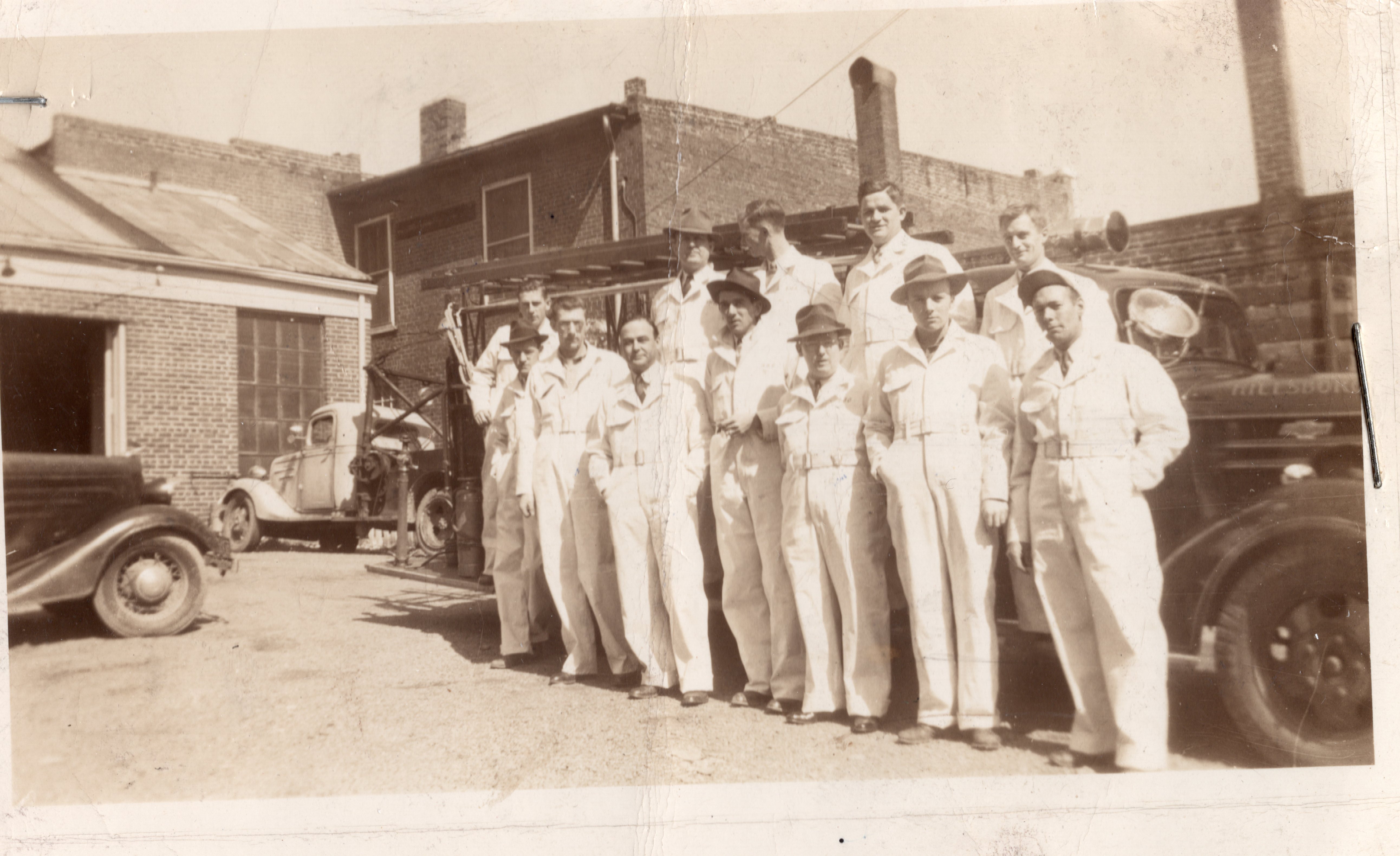
Firefighters with truck outside Eno Chevrolet
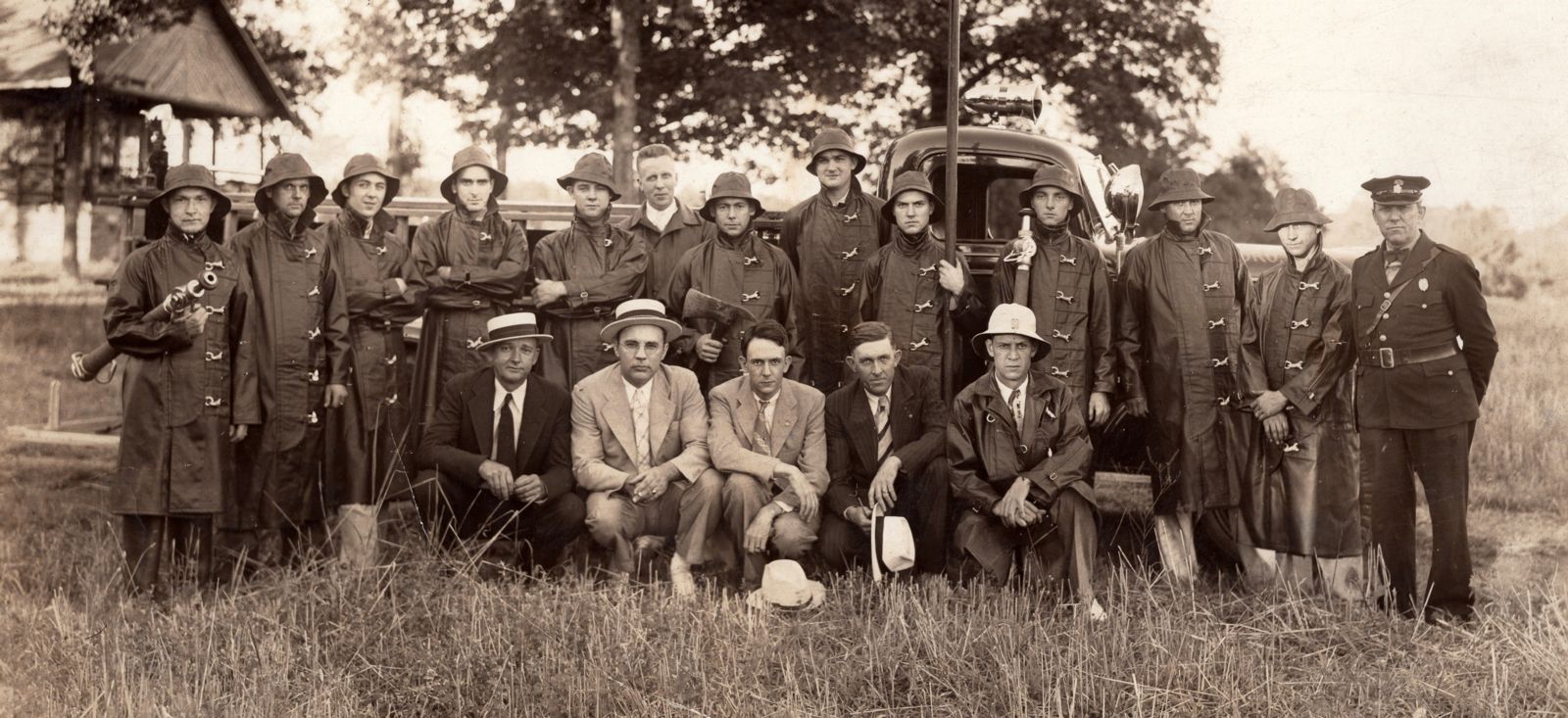
In March of 1937, the Town Board of Commissioners appointed George Gilmore as the first fire chief of the Hillsboro Fire Dept. The department consisted of a strong foundation of volunteers many of whom were the local merchants who would stop what they were doing and head to the fire station when the siren sounded. By 1943, the department had grown to include a Chief, Assistant Chief, and 18 volunteer firefighters.
Over the years, the town of Hillsboro endured through the recovery of the economy and then WWII. In 1947, the Fire Dept. was notified by Eno Chevrolet that they needed the garage space for new equipment and would need to relocate. George Gilmore owned an auto repair garage on King St. there was an open lot between his garage and the Western Auto. This space was acquired and a shelter was built between the two buildings to house the fire truck and become the new fire station.
1947 also brought in a new phone system. Dial phones were introduced and the electric siren control was moved to the new fire station since the station could be called direct at 2222.
1936
Water Plant and Water Lines (PWA Project) Federal PWA-funded water treatment plant built by J.B. McCrary Company, sourcing water from Eno River. System included reservoir, standpipe, and 85-foot water tower serving 38 fire hydrants. Replaced bucket brigade system and enabled establishment of town's first official fire department in 1937.
1937
WPA-funded 1937 Chevrolet/American LaFrance fire truck (500 GPM pump, 150-gallon tank) purchased from Eno Chevrolet in Hillsborough. Truck housed at Eno Chevrolet garage, which served as first fire station - moved out daily for business operations, returned at night. Electric siren installed outside garage, controlled by telephone exchange operator on King Street. Truck served department for 27 years until replaced in 1964.
Appointed first Fire Chief by Town Board of Commissioners in March 1937. Led all-volunteer department including many local merchants. Served 33 years (1937-1970), making him the longest-serving chief in department history. Owned garage business on King Street and later became incorporator of Orange Rural Fire Department No. 1 Inc. in 1968.
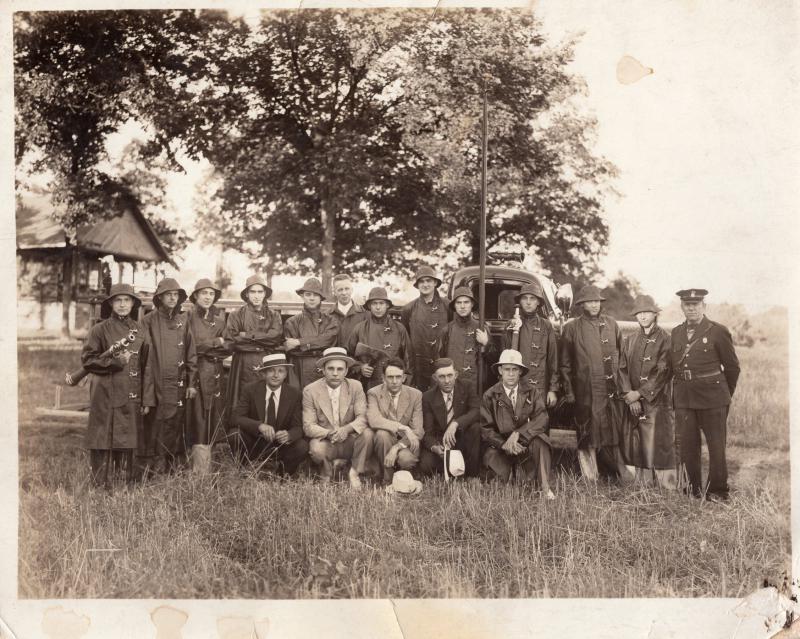
Hillsboro Fire Department in 1937
Pictured are the founding members with Chief George Gilmore and the original fire truck left to right are (kneeling) Rainey Roberts, Dr. H.W. Moore, Edwin Lynch, Mayor Ben Johnston, Chief George Gilmore; (standing) Marvin (Jug) Walker, Herman Strayhorn, Curtis (Hank) Rhew, Jim Gordon, C.D. (Buck) Knight, Vincent (Chunk) Forrest, Leonard Rosemond, Roger Wilson, Homer Watkins, Seth Thomas, Mitchel Lloyd, George Teer and Harvey Watkins
1943
Sanborn MapInsurance map indicates location of fire dept. and hydrants. Documents department as volunteer organization with Chief, Assistant Chief, and 18 firefighters operating a 1937 Chevrolet/Barton 500/100 with 38 fire hydrants providing water supply and 80 pounds domestic pressure at courthouse.
1944
Hollywood TheaterHillsborough Fire Department provided mutual aid to Mebane for Hollywood Theater fire. Multi-department response also included Burlington and Graham fire departments, demonstrating early regional emergency cooperation. One of the first documented mutual aid calls for the department, established just seven years earlier in 1937.
1945
FloodingMajor flooding from Homestead Hurricane impacts Orange County with nine bridges washed out. Hillsborough Fire Department assisted with evacuating two families in Eno Village during one of North Carolina's most disastrous floods in history. The remnants of the Category 4 hurricane that struck Florida crossed central North Carolina as a tropical storm, causing extensive river flooding across eastern NC and paralyzing the highway system including 9 bridges in Orange County. This represents an early example of the fire department's expanding role in emergency services beyond firefighting, conducting water rescues during natural disasters.
1947
Planning began May 1947 after Eno Chevrolet requested fire department vacate to accommodate new equipment. Town acquired lot on King Street between Chief Gilmore's garage and Western Auto, constructed three-bay garage adjoining Gilmore's property. September 1947: Major technological upgrade with installation of telephone fire alarm system - direct line 2222 - transferring siren control from telephone exchange to fire station. Also
implemented stricter enforcement of 1.5-mile rural response limit. Move represented significant modernization from shared automotive garage to dedicated fire facility with improved communications technology.
1950-1959: Rural Fire Protection Begins
The town of Hillsboro continued to grow as well as the call volume. The fire department would occasionally respond to fires outside of the town limits and this became a growing concern that this would leave the town vulnerable if a fire outbreak occurred and the equipment paid for by the taxpayers was not available. In 1951, the need for a rural fire truck became a reality with the creation of the Orange Fire Protective Association to serve the rural 10-12 mile areas outside the town limits. Funding for the rural truck was raised through membership dues for the new association. One-time membership fees were $10 for residential property and filling stations; $15 for farm buildings including outbuildings. The membership fee would cover the initial cost of the new truck and equipment. There was a map displayed at the fire station which indicated the members that would be served by the fire equipment. The Hillsboro firefighters volunteered their services and would fight fires in the county with the new rural truck which was housed in the same station with the town truck.
1951
Community leaders launched an ambitious campaign to extend fire services beyond the town limits of Hillsborough into rural areas. Early in the year, meetings were organized to establish rural fire protection, leading to the formation of the Orange Fire Protective Association as the coordinating body. A committee structure was established with prominent community leaders, including E. Wilson Cole, the Hillsborough Bank Manager, to plan and finance this critical public safety initiative.
On January 18, 1951, the effort gained significant momentum with the formal launch of the campaign, as announced in the News of Orange County under the headline "Move To Purchase Fire Equipment For Orange Rural Areas Launched." This marked the beginning of an intensive membership drive that would continue through the early months of the year, with organizers reaching out to rural residents and property owners to secure both financial support and community participation in the new fire protection system. The goal was $5000 with fees of $10 per house $16 per farm building.
By March 15, 1951, the campaign had achieved remarkable success, with the new 1951 Ford fire truck arriving in Hillsborough, though it still required additional equipment to become fully operational. Treasurer A.C. Jones reported that $4,500 had been contributed by 260 members of the Orange Fire Protective Association, demonstrating strong community support for the initiative. The fundraising efforts continued throughout 1951 to complete the equipment purchases and establish training programs for the volunteer crew, ultimately laying the foundation for comprehensive rural fire protection that would evolve into the modern Orange Rural Fire Department. This community-driven effort represented a successful transition from town-only fire coverage to county-wide rural fire services, addressing a critical safety need for Orange County's growing rural population.
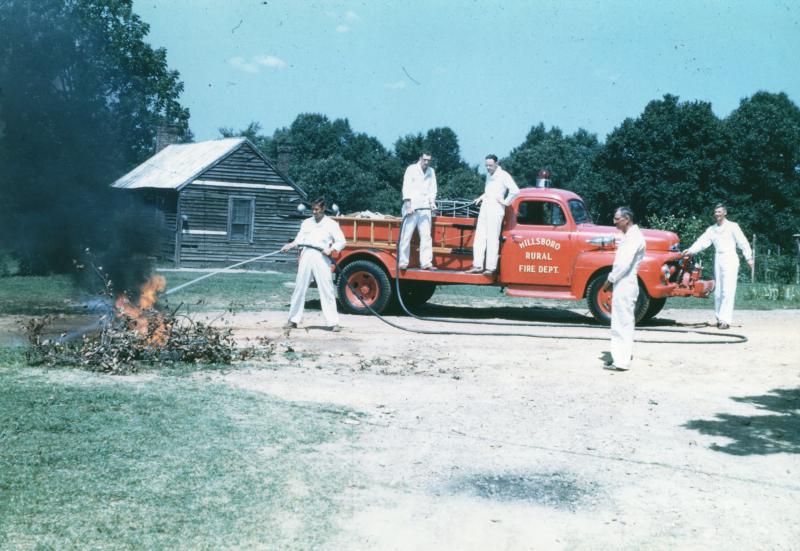
Early Rural Fire Equipment
1951 Ford truck with front-mounted pump serving Orange Fire Protective Association
1952
Formal Fee Structure Introduced The Orange County Rural Fire Department implemented a formal fee structure with annual memberships at $20 for residential and $30 for farm properties, while charging non-members $50 per service call. By May 1952, the department was debt-free with 260 members contributing $4,500, and had responded to sixteen calls in its first year serving rural areas outside Hillsboro city limits. The organization's name evolved from "Orange Fire Protective Association" to "Orange County Rural FD," reflecting its established role in county-wide rural fire protection.
1958
Central High School Fire Central High School for Negroes in Hillsboro was destroyed by fire in what was to be an unsolved case. The fire occurred during the night, completely destroying the segregated African American school building. The Hillsboro Fire Department responded to the emergency, with Mebane Fire Department providing mutual aid assistance.
1960-1969: Orange Rural Fire Department Founded
In 1968, community leaders were brought together and developed an ambitious plan to put a formal rural fire department in place. The 17-year-old rural truck was aging and a long-term solution for rural fire coverage was needed. The plan was spearheaded by the Hillsborough Exchange Club led by Marshall Cates and Marion Clark. Memberships were sold to raise money for a new truck and equipment. The membership fee of $20 for residential and $30 for complexes was for the first four years and then an annual fee afterwards. Most of the coverage area would be in the north, east, and west areas of the county. The southern areas of the county would be handled by Eno, Chapel Hill, and Carrboro Fire Departments. The Orange Rural Fire Department was soon incorporated and funds from the membership drive were successfully raised to purchase a new truck and equipment.
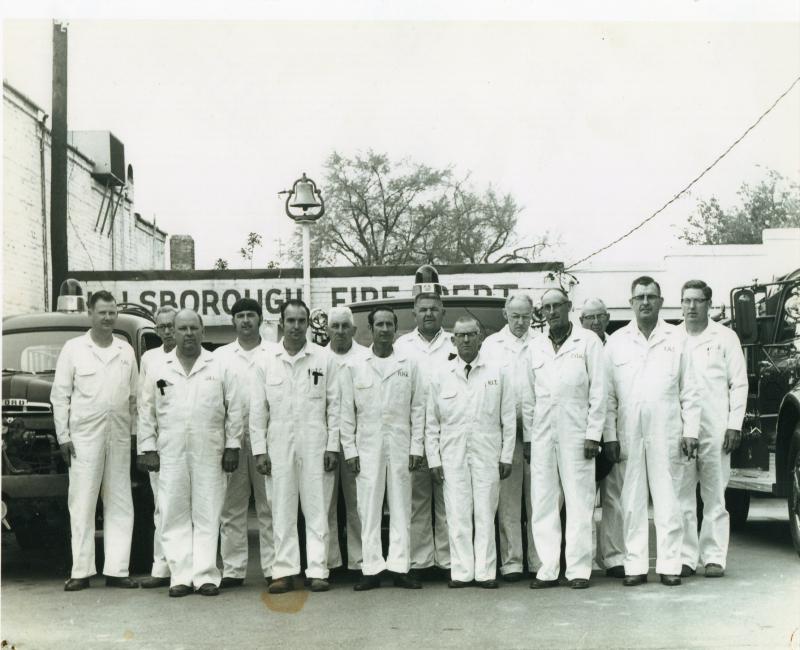
Pictured left to right. Chandler Cates, Marion Clark, John Rainey Lynch, Wayne Kendrick, Tyson Clayton, Brandon Lloyd, Allen Walker Jr., JE Latta, Ralph Thomas, Allen Lloyd, Charlie Williams, George Gilmore, Foye Cole, Sandy Davidson.
circa 1969
1960
Eno Fire DepartmentThe Eno Fire Department was formally incorporated in 1960, establishing organized fire protection for the Eno community in Orange County. This incorporation was part of the broader expansion of rural fire protection services throughout Orange County during the 1960s. The creation of Eno Fire Department helped provide dedicated fire protection coverage to areas that had previously relied on mutual aid responses from neighboring departments, improving emergency response times and local fire protection capabilities for the Eno area residents.
1964
HFD purchases new pumper: 1964 Ford F-700/American LaFrance, 750/500, replacing the original 1937 Chevrolet that served for 27 years.
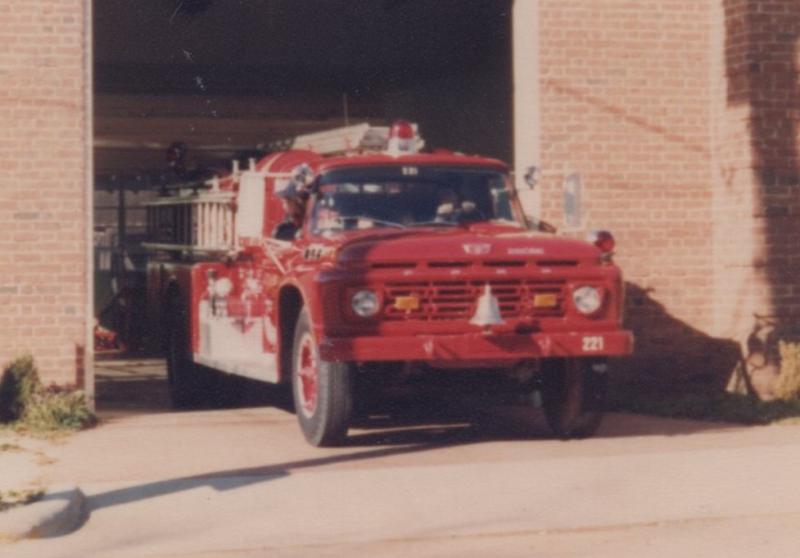
1964 Ford F-700 American LaFrance
1965
Town officially changes name from Hillsboro back to Hillsborough, affecting all department designations and equipment lettering.
1968
Plans presented to develop new rural fire department. (
1,
2,
3,
4,
5)
June 11th:
Orange Rural Fire Department No 1 Inc. officially chartered with incorporators Marion Clark, Marshal L. Cates Jr., Reid Roberts, George Gilmore, and Clarence D. Jones serving as the initial Board of Directors. This established ORFD and HFD as separate entities with separate equipment, personnel, and budgets, though operating under the same roof and chief, with town trucks restricted to city limits and rural trucks serving outside areas.
Dedication ceremony held in July.
New Orange Rural FD truck purchased: 1968 Chevrolet C60 John Beam with 750 GPM high-pressure pump, 500 gallons. Cost $18,300.
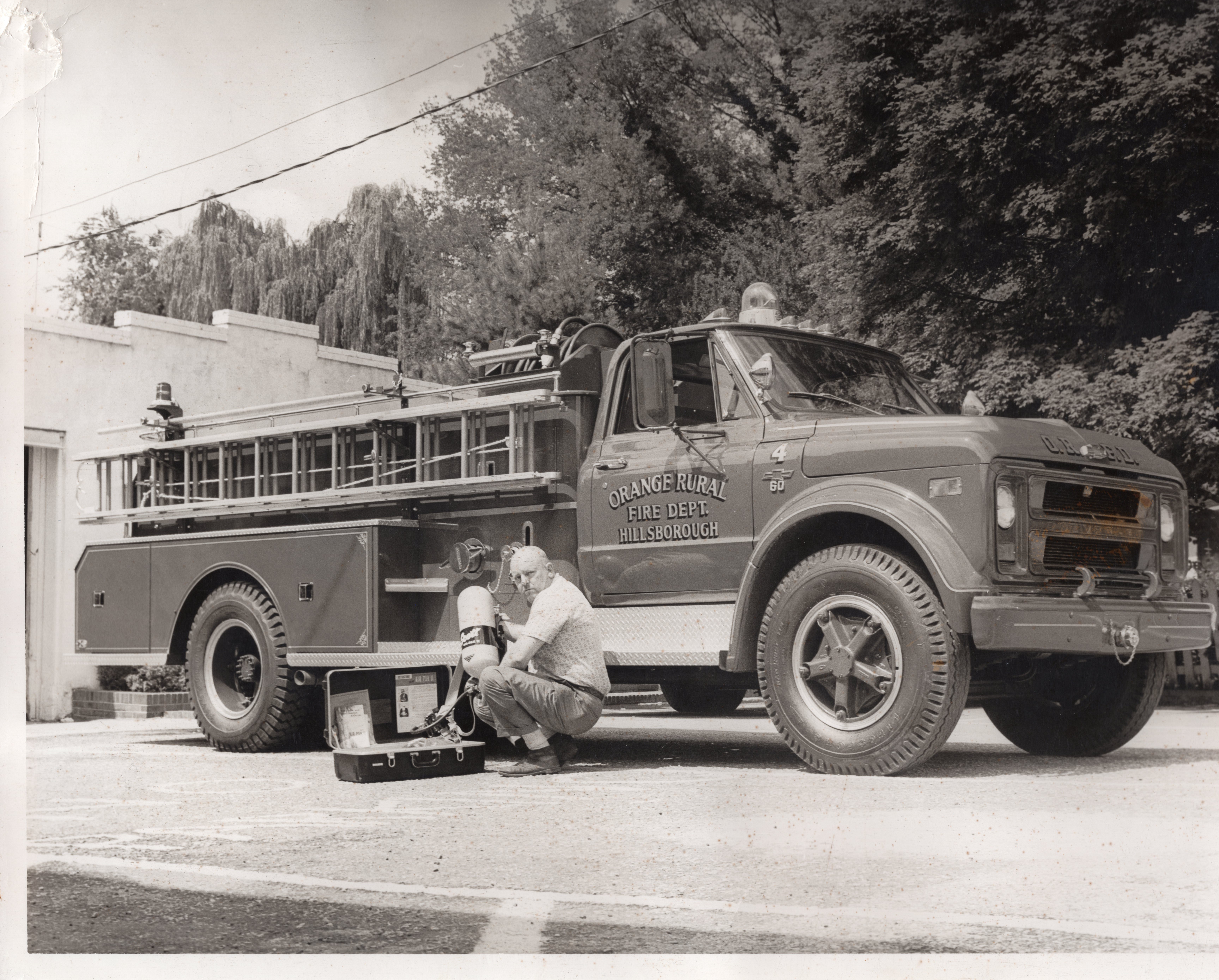
1968 Chevrolet C-60 John Beam 750gpm / 500 gal.
Second rural truck purchased in 1968 to replace 1951 Ford. First truck purchased by ORFD.
1970-1979: Expansion and Growth
After 33 years of faithful service as Chief, George Gilmore passed the reigns over to Chandler Cates. Orange County continues to grow and adequate fire coverage in the rural areas is a big focus. The new Orange Rural Fire Dept. is providing fire coverage as far as 15 miles out which makes it very challenging to be able to stop a fire before consuming an entire building. In 1971, the Orange Rural Fire Board of Directors started a project that would provide fire coverage for all of Orange County. The county was growing rapidly and the fledgling department was not able to keep up with the increasing call volume. This project lasted for several years. Chief Cates played a big role in helping the new departments get started including training of firefighters.
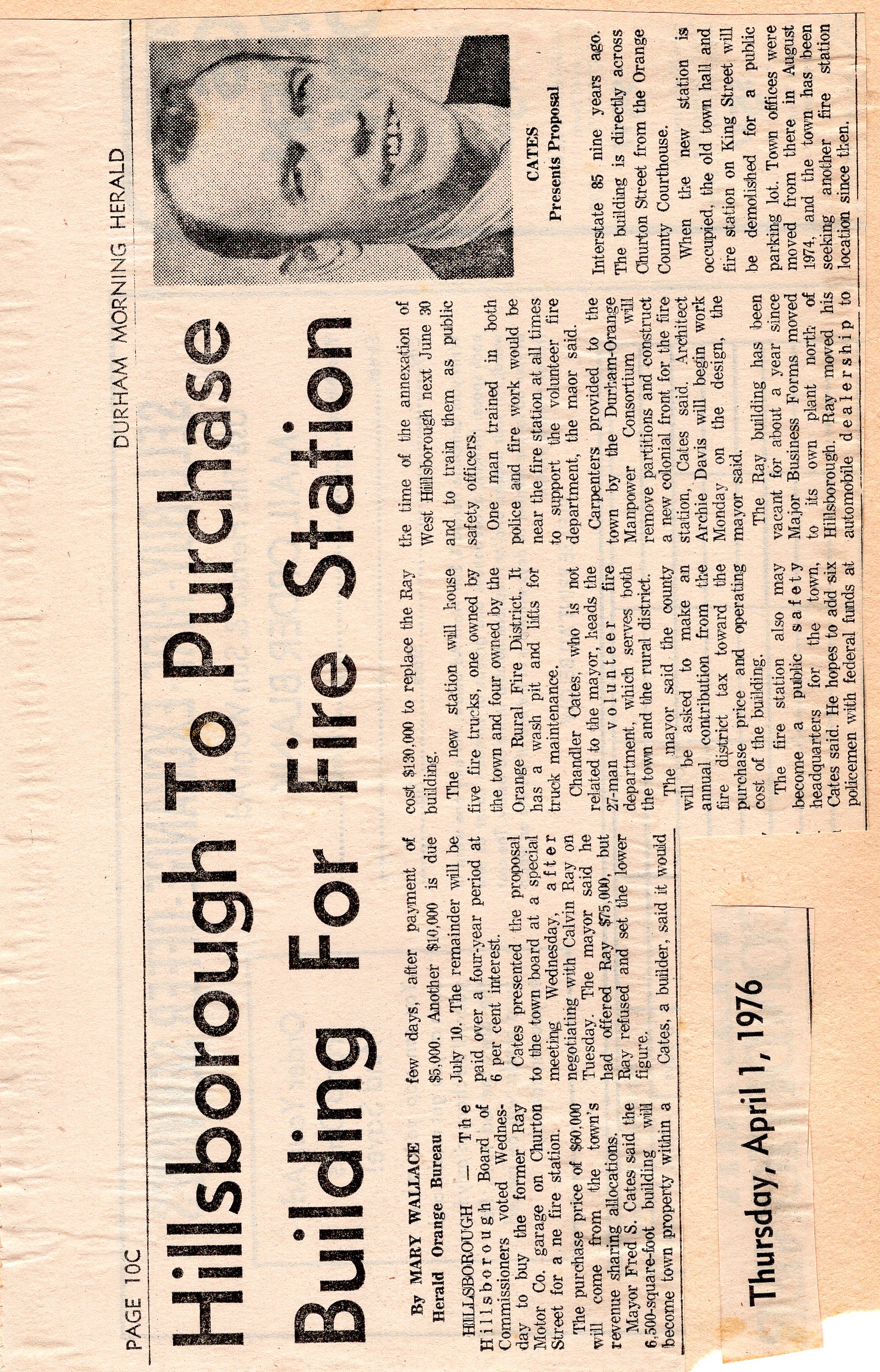
As the department grew, space became more limited. In 1976, the fire department moved to a new location formerly Ray Motor Company on Churton St. The Town of Hillsborough bought the building and Orange Rural Fire bought the adjacent lot.
1970
November: Department members complete a 14-week, 42-hour
organized training program sponsored by Durham Technical Institute.
Chief George Gilmore retires after 33 years of service.
Chandler Haywood Cates assumed leadership as the fire department's second Fire Chief. Cates, who would serve the department for 60 years in various capacities, was instrumental in the formation of the Orange County Rural Fire Departments and became chief during a period of significant expansion and modernization. His leadership philosophy emphasized investing in new equipment and proper facilities, advice he would later share with other developing rural fire departments throughout Orange County.
1972
Project to set up fire districts in the county is underway.
1 2 3 4Orange Grove Volunteer Fire Department is incorporated.
September 8th:
Efland Volunteer Fire Department is incorporated
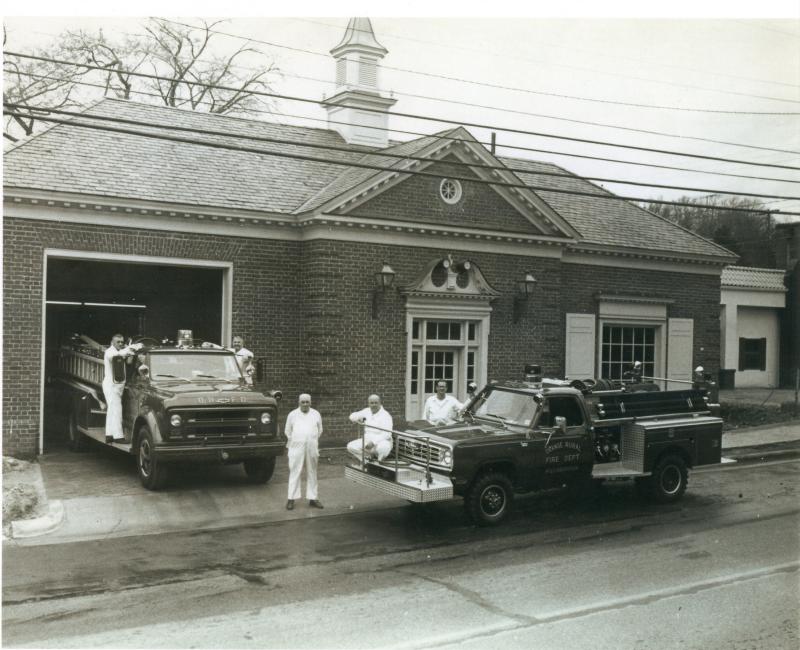
New Fire Station on Churton Street
Former Ray Motor Company building purchased in 1976
1978
John Forrest elected Chief
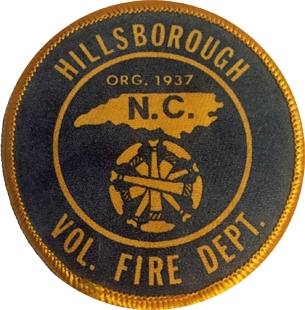
Late 1970s Department Patch Design
Used for both HFD and ORFD operations during the shared department era
1980-1996: Challenges and Change
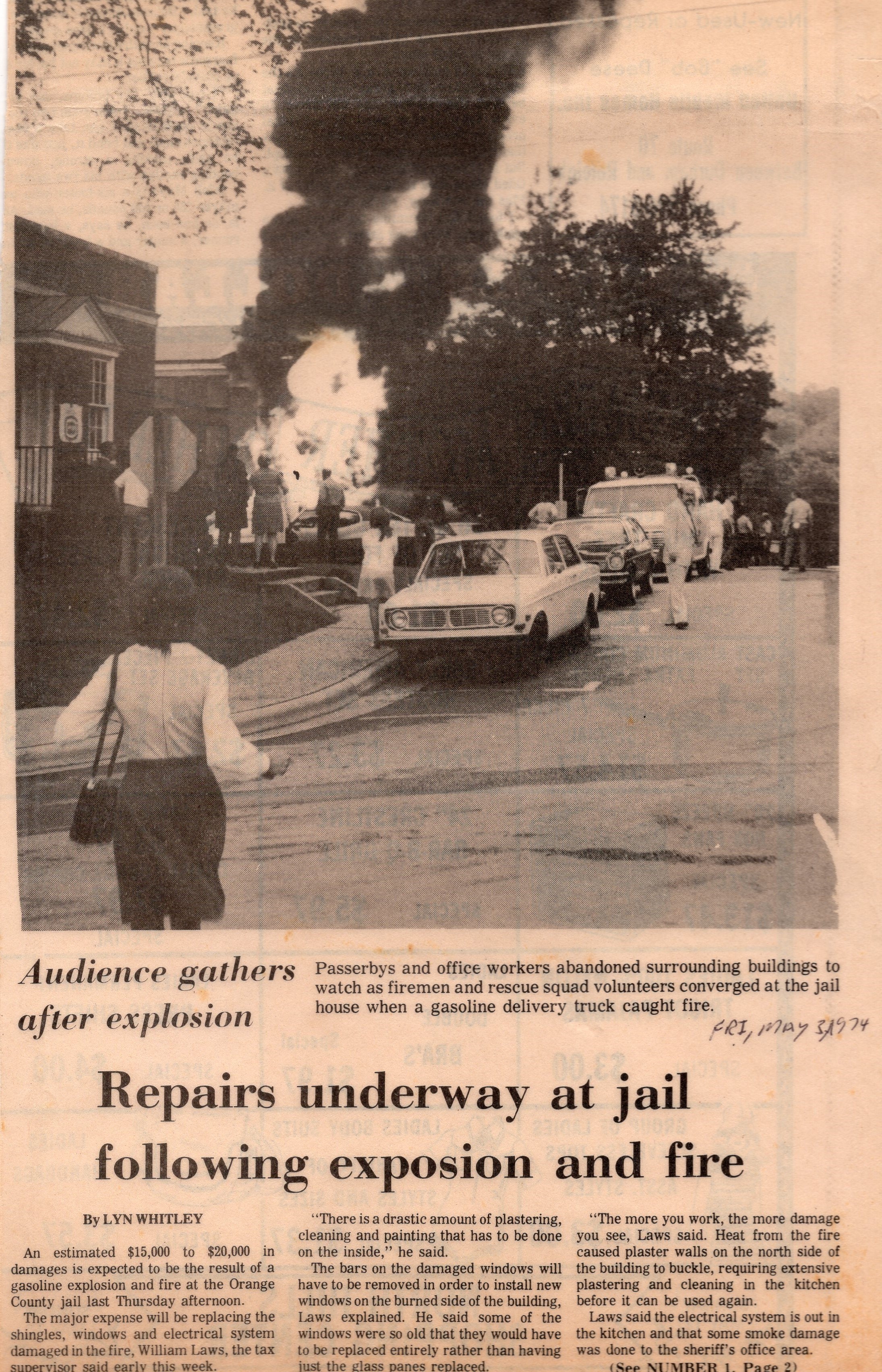
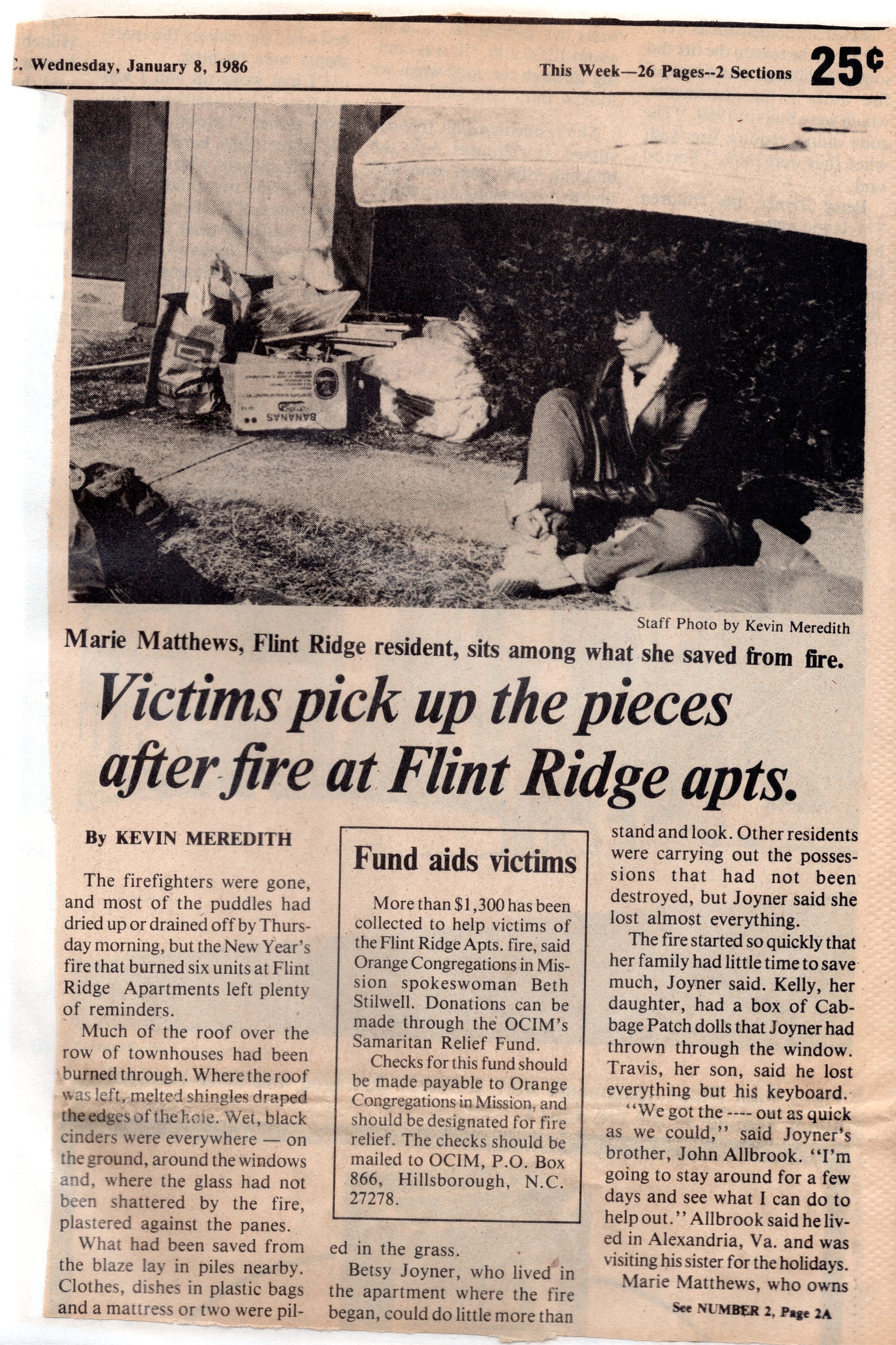
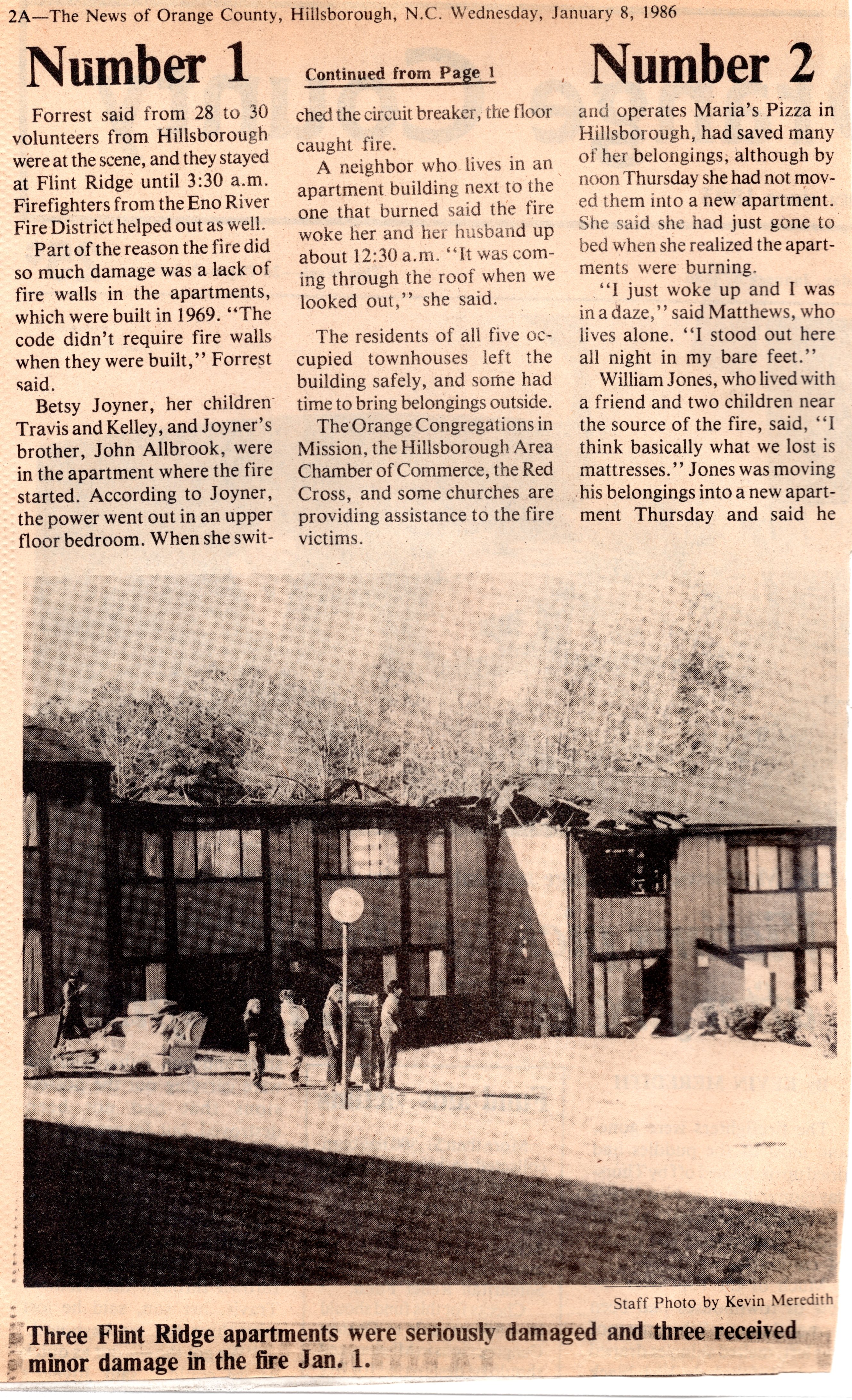
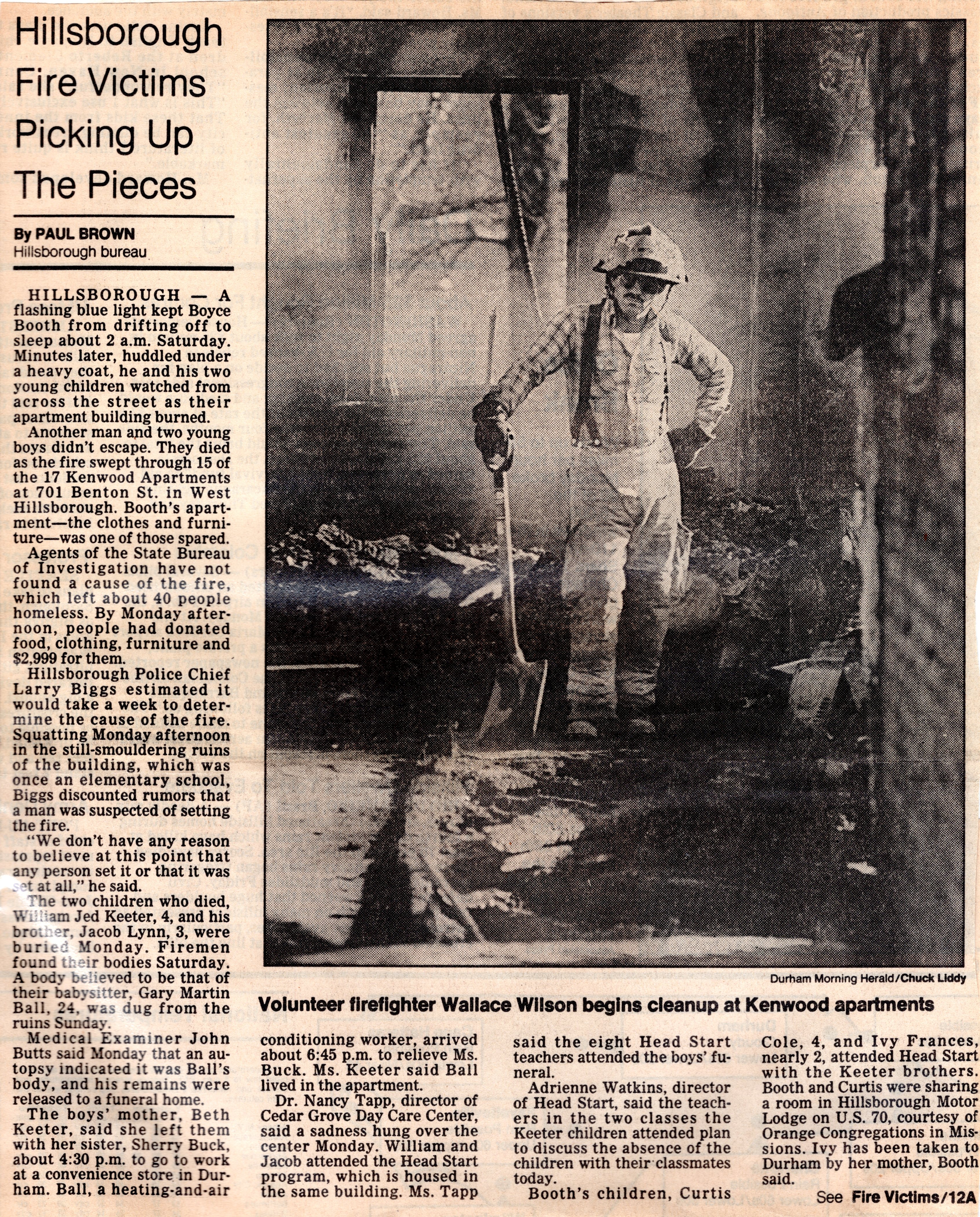
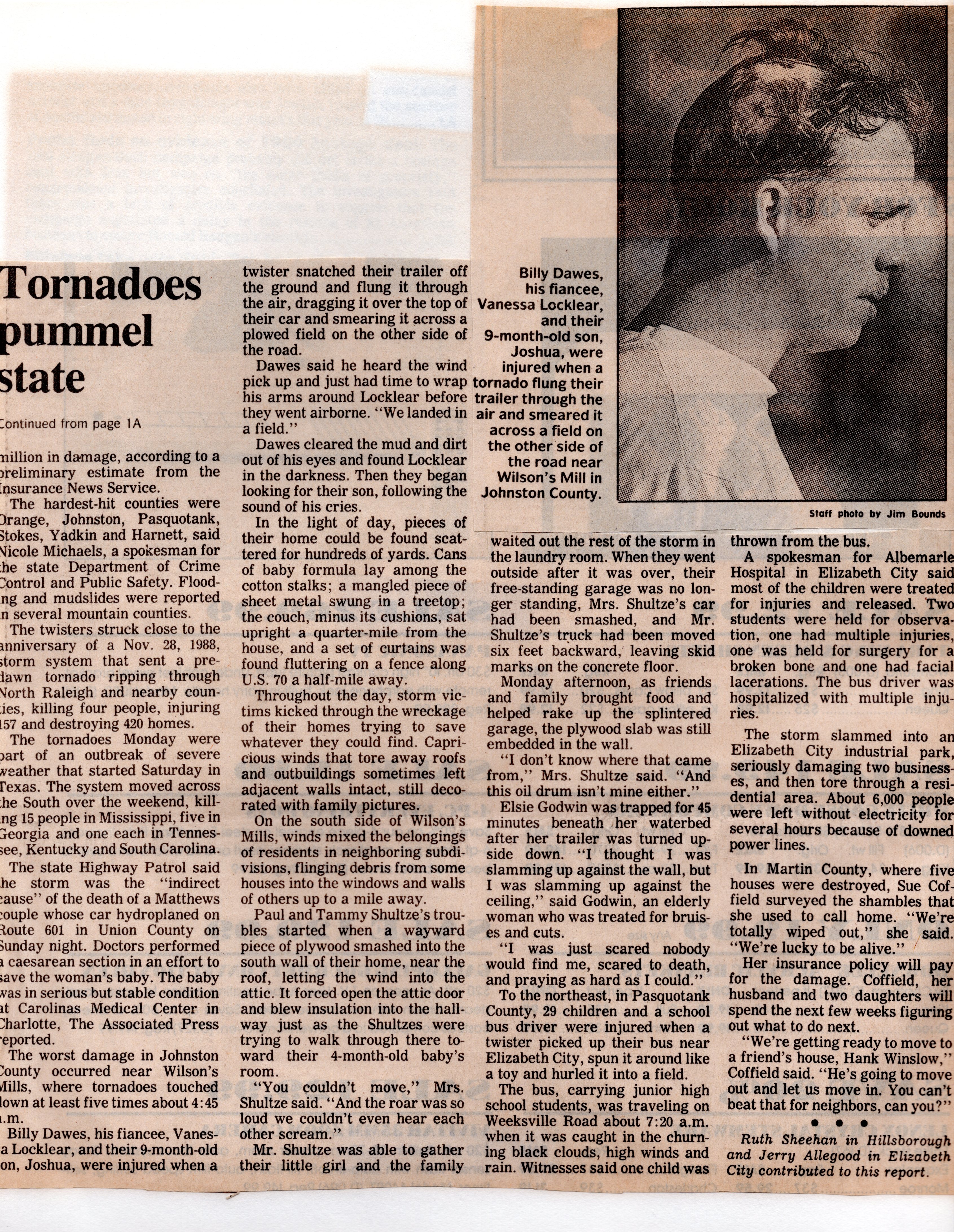
This era brought some of the worst tragedies in recent history. A massive fire at Kenwood Apartments killed three people including two children. A deadly tornado that tore through the northern part of town killed two. The largest fire in Hillsborough history was in 1990 when a majority of the Hillsborough Business Center was destroyed.
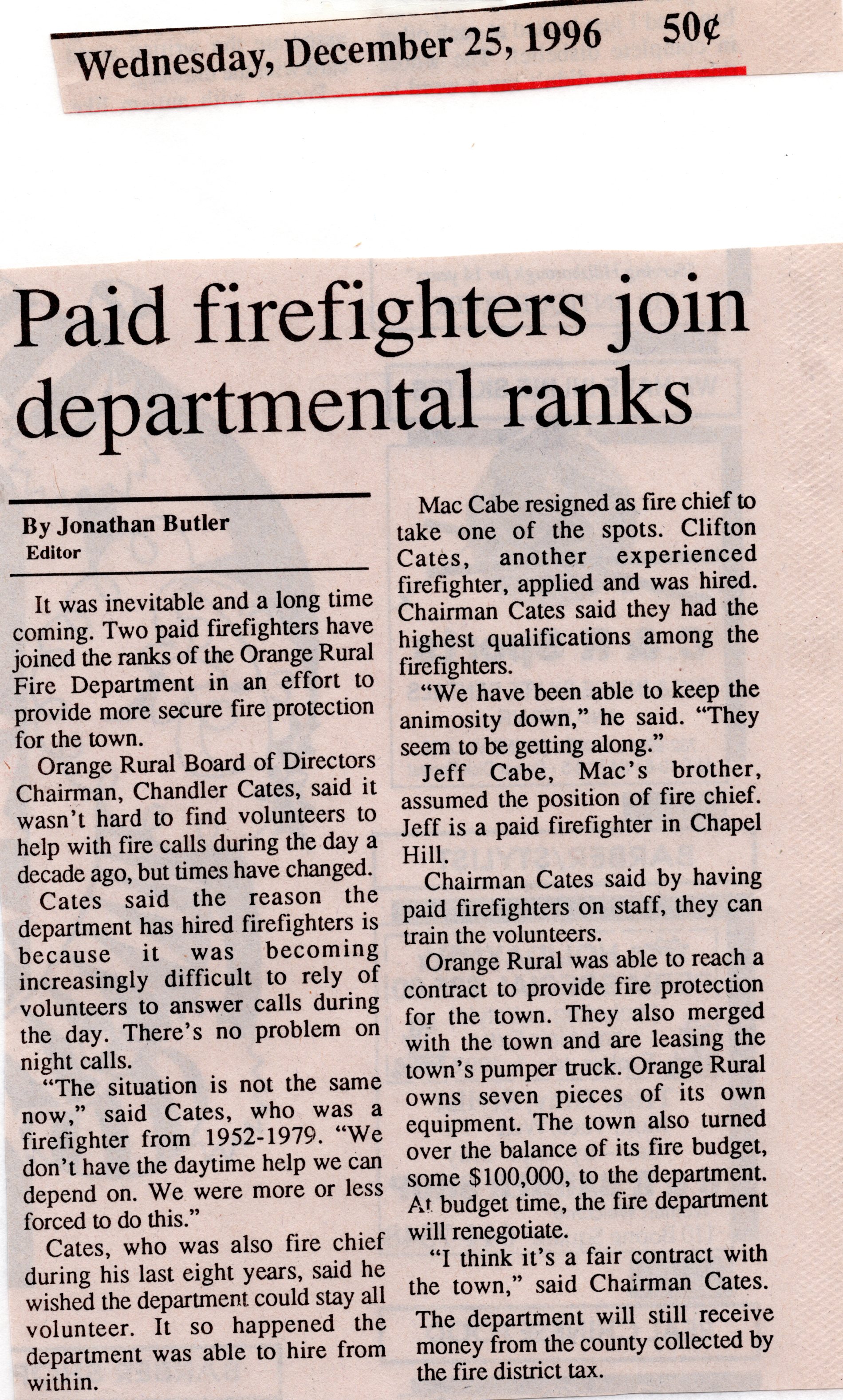
With increasing call volume, it was becoming more difficult to have adequate response from volunteers especially during the day when everyone was working. Paid firefighters were needed to fill the void. A decision had to be made by the Town of Hillsborough about funding payroll since the same firefighters are responding in the rural areas with ORFD. The NC League of Municipalities suggested that it was not in the town's "best interest" to have a fire department that would respond to fires outside the service area (rural area). ORFD and the Town of Hillsborough entered a contract in which the town maintained the current building and provide for one truck and ORFD provides fire coverage for the town.
Timeline
1982
ORFD opens Station 2 at 835 Phelps Road to improve response times in eastern coverage area.
1983
Jane Combs becomes the first female volunteer firefighter to join the department.
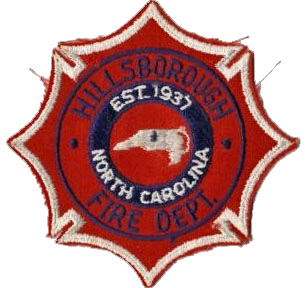
Mid-1980s Department Patch Design
Updated design reflecting the unified department structure and evolving organizational identity
1988
February 20th:
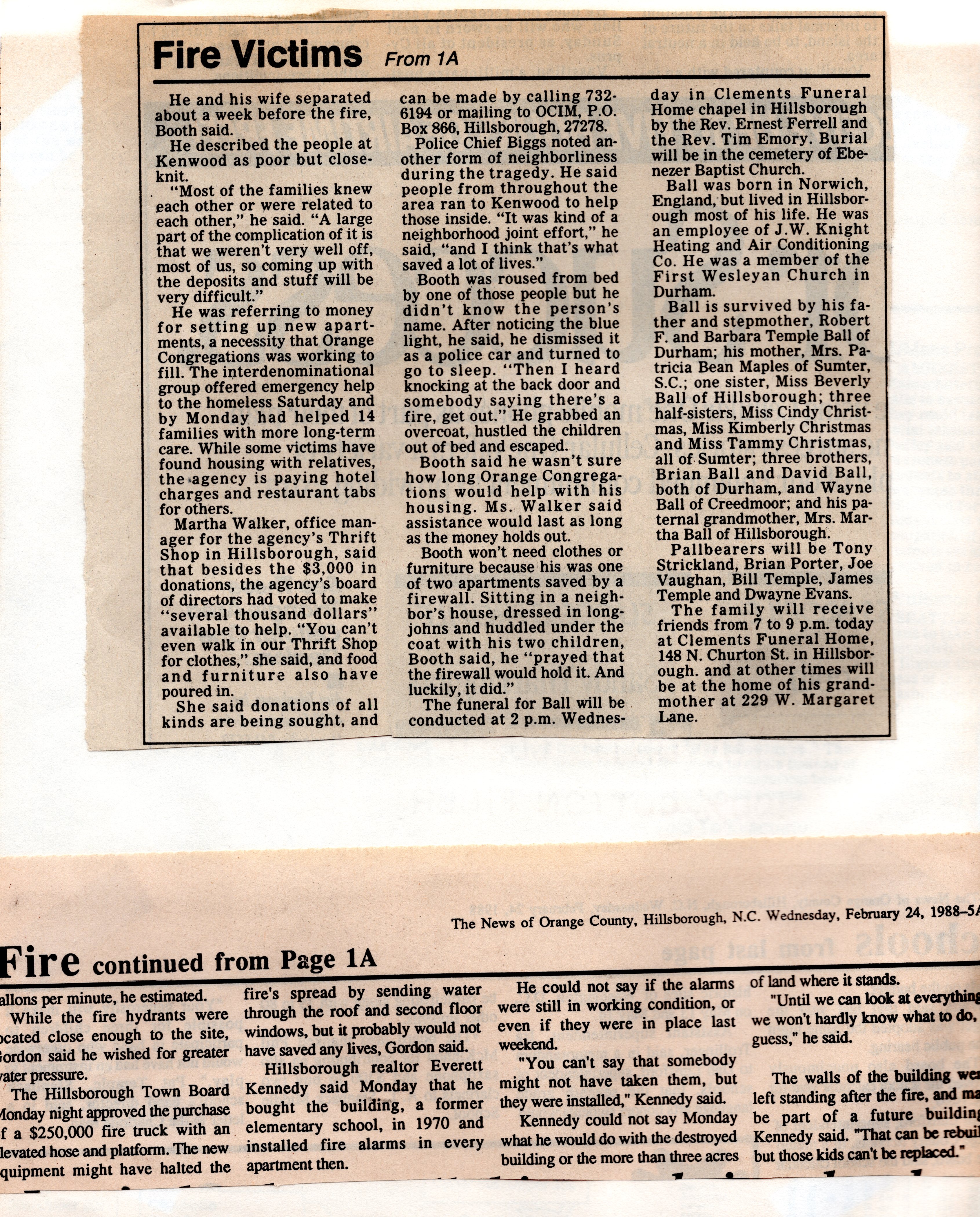
Kenwood Apartments fire 2 Tragic fire at 701 Benton Street in the former West End Graded School building (converted to 17 apartments in 1970). Fire "burned through the building in 20 minutes" killing three people: two young brothers aged 3 and 4, and one man. Fourteen apartments destroyed, 40 people displaced. Only the separated wing sections with fire walls survived.
1990
March 11th:
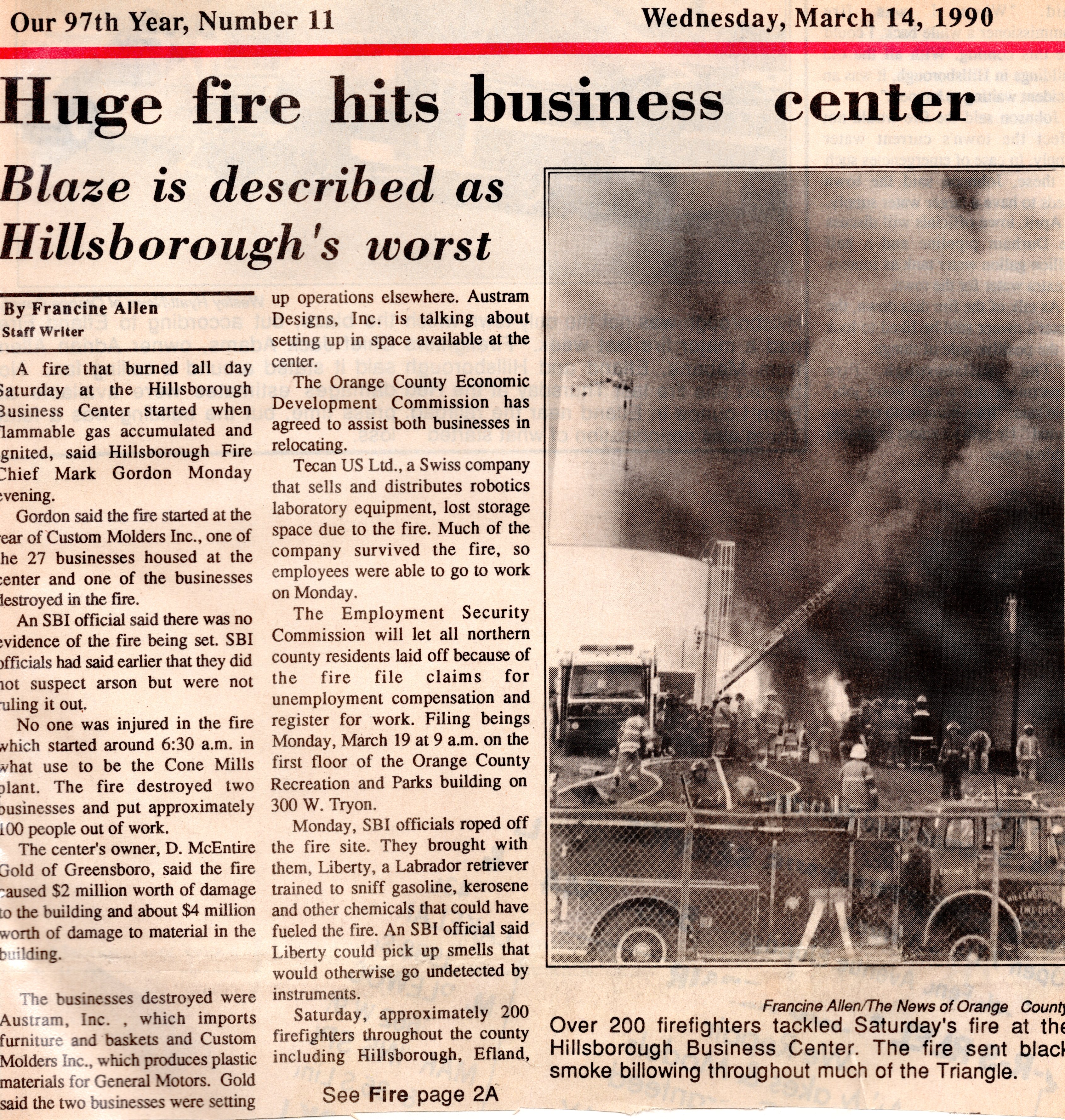
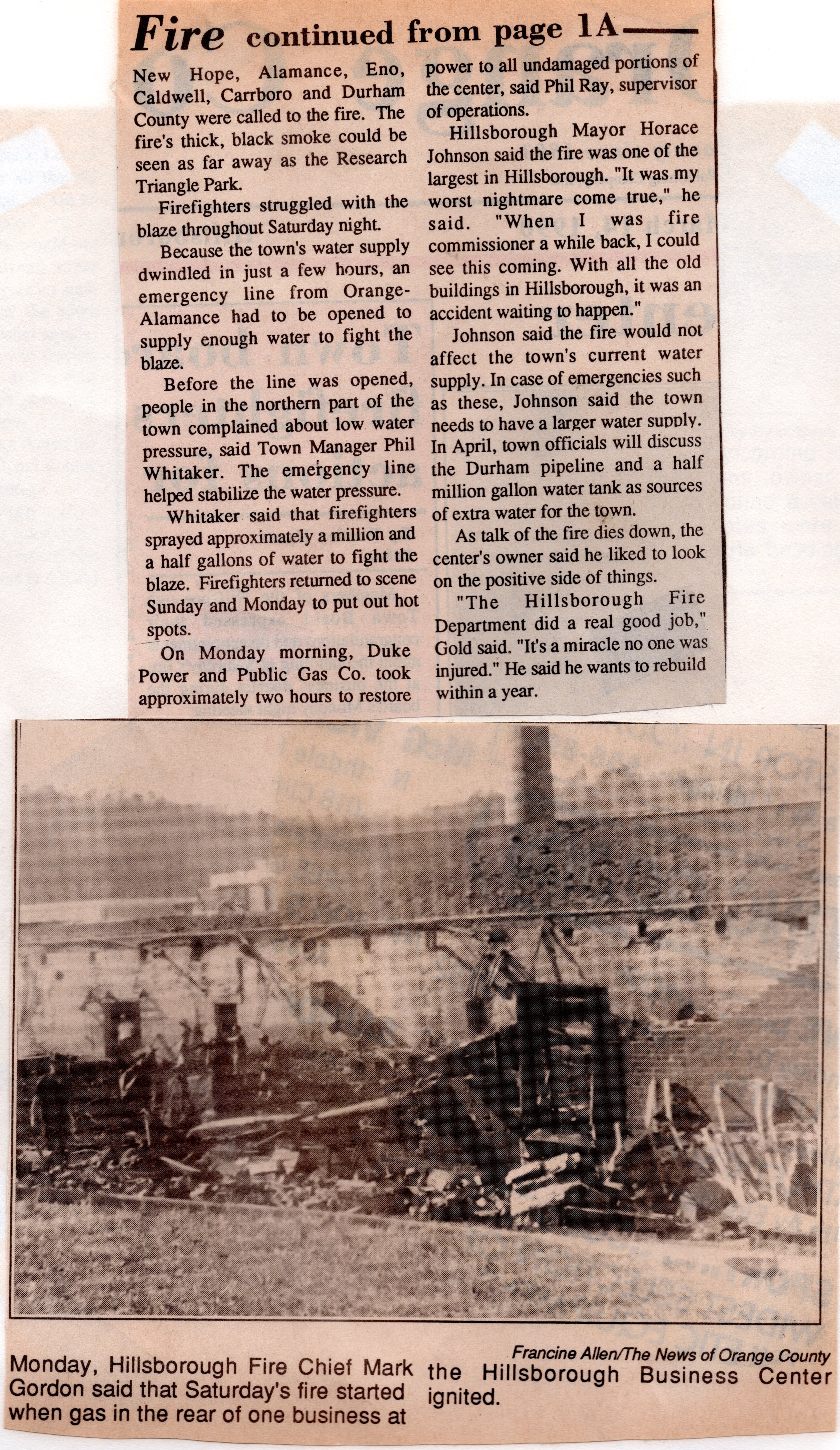
Hillsborough Business Center fire 2 Largest fire in Hillsborough history destroyed 60,000 sq ft of the former Cone Mills Eno plant. Over 200 firefighters from 8 departments responded, flames reached 100 feet high, and smoke was visible from Burlington. Three businesses were completely destroyed, putting 100+ people out of work.
1992
November 23rd:
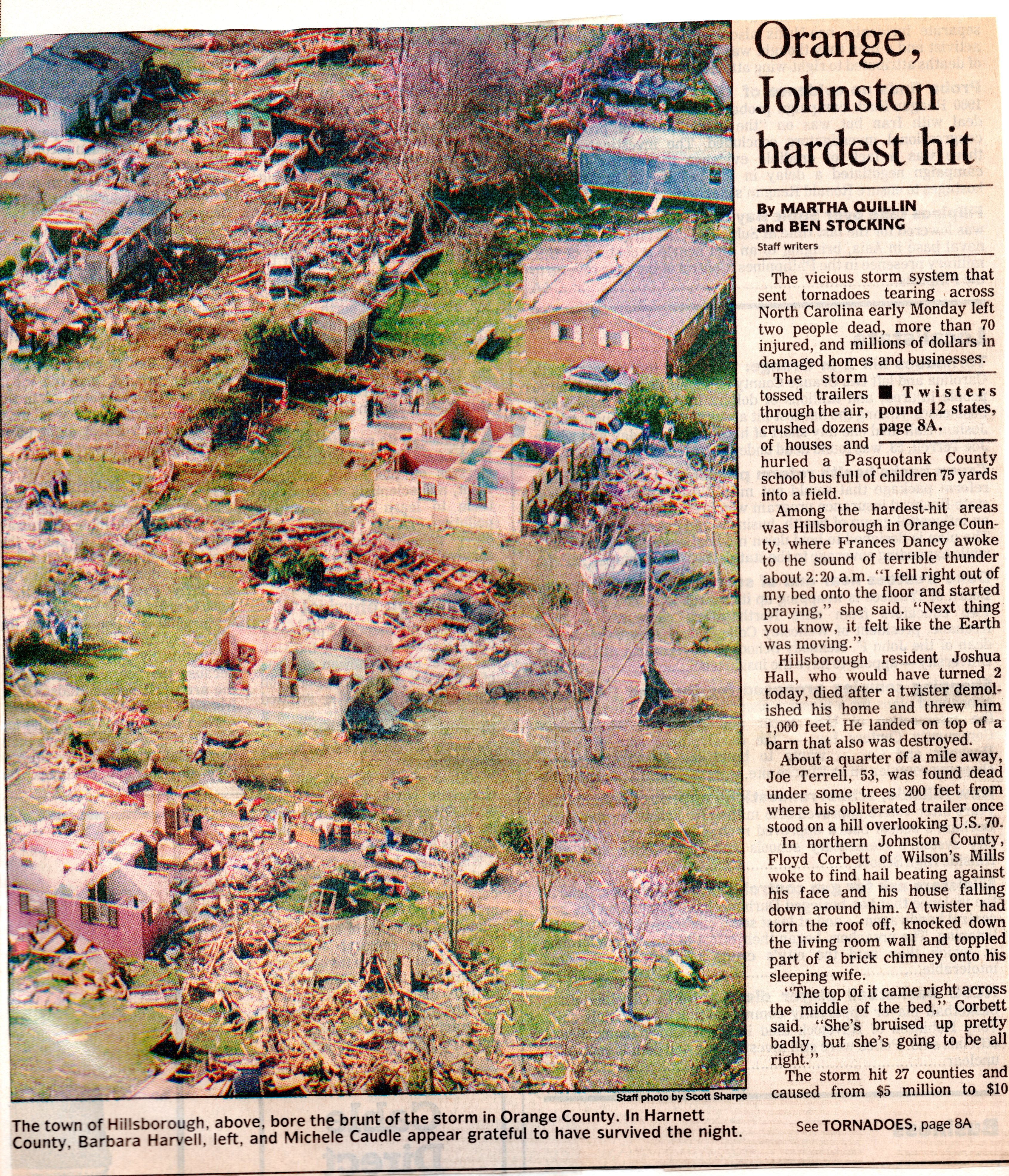
Deadly tornado hits Hillsborough 2 F3 tornado with winds up to 3/4 mile wide struck west and north Hillsborough. Two fatalities: 2-year-old Josh Hall and Joe Terrell. 53 homes and 9 businesses destroyed, 18 people injured. Part of a widespread tornado outbreak affecting North Carolina.
1994
♦ Jimmy Summey elected Chief
1996-Present: Modern Era
The modern era of Orange Rural Fire Department began with the implementation of paid firefighters and a formal contract with the Town of Hillsborough. This period has been marked by significant equipment upgrades, facility expansion, and enhanced service capabilities.
Timeline
1996
♦ Mac Cabe elected Chief: Resigned to become one of the first two
full time firefighters.
♦ Jeff Cabe elected Chief
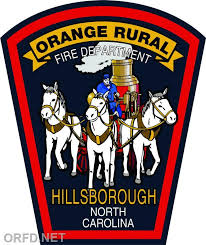
Current Department Patch Design
Modern patch representing the consolidated Orange Rural Fire Department serving both town and rural areas
2008
♦ Crews deployed for the Evan's Road wildfire which burned 40,704 acres of Hyde, Terrell, and Washington Counties.
2011
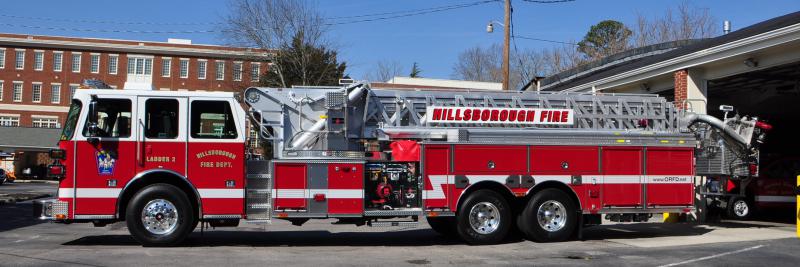
♦ Town of Hillsborough purchases Sutphen SP-95 Ladder.
2012
♦ ORFD opens Station 3 located at 2510 Walker Road.
2015
♦ January 14th: ORFD Engine 232 overturns on Phelps Road at Mason Keyon Road while responding to motor vehicle crash. Apparatus totaled but no firefighter injuries.
♦ December 18th: Town of Hillsborough and ORFD each receive matching
2015 Sutphen Monarch pumper/tankers (1500/1000). Town unit replaces 1996 KME, ORFD unit replaces overturned Engine 232.
2016
♦
Mill Fire at 202 S. Nash Street.
♦ Crews completed back-to-back deployments to Lumberton and then to Brunswhich County with a tanker to assist the area after Hurricane Matthew damaged critical infrastructure.
♦ Crews deployed to
Chimney Rock, NC for large woods fire,
Second crew deployed later in the week.
2018
♦ Crews complete back-to-back deployments during Hurricane Florence to Hoke County (9/13-9/15) and Brunswick County (9/16-9/21) providing coverage during the initial storm making landfall as well as initial recovery efforts after.
2019
♦ Crews complete simultanious deployments during Hurricane Doiron to Newport Fire Deparment to assist with storm preparation and response and to the RCC-Central Operations Office in Bunter to assit with logistics.
2023
♦ ORFD is recognized by NCREMS to provide Structural Collapse, Trench and Water Rescue.
♦ Engine 234 goes into service at
Station 4 located at 352 College Park Rd.
♦ Crews
Deployed to Henderson County in November to assist with
Poplar Drive Fire.
♦
Responded to East Parker Street in Graham to assist with a large commercial structure fire at the old
Culp Weaving Textile Mill.
2025
♦ Crews
deployed to Polk County to assist with wildfire suppression efforts, assigned to the Mill Spring Community
Fire Chiefs: Leaders of Service
The Orange Rural Fire Department and Hillsborough Fire Department have been guided by dedicated leaders who have shaped our organization's growth and commitment to public safety. These chiefs have served with distinction, leading by example and ensuring the highest standards of emergency response for our community.
George Gilmore
First Fire Chief
1937 - 1970
Founded the Hillsborough Fire Department and served for 33 years. Instrumental in establishing rural fire protection and the formation of Orange Rural Fire Department.
33 Years of Service
Chandler Cates
Second Fire Chief
1970 - 1978
Led the department through major expansion and helped establish fire districts throughout Orange County. Served the department for 60 years in various capacities.
60 Years Total Service
John Forrest
Fire Chief
1978 - 1986
Led the department during continued growth and modernization efforts in the late 1970s and early 1980s.
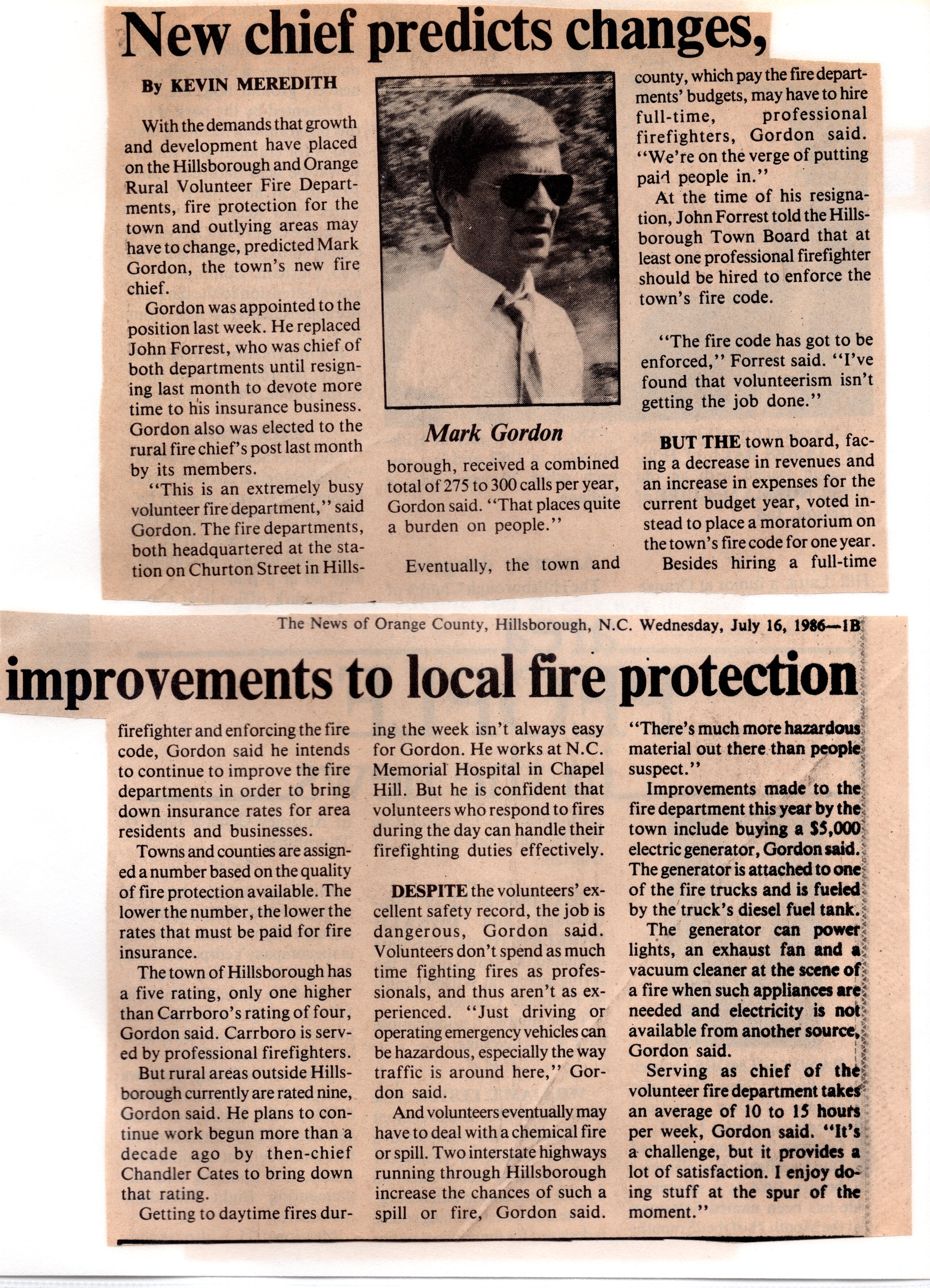
Mark Gordon
Fire Chief
1986 - 1994
Served during challenging times including major incidents like the Kenwood Apartments fire and Hillsborough Business Center fire.
Jimmy Summey
Fire Chief
1994 - 1996
Served during the transition period leading to the implementation of paid firefighters.
Mac Cabe
Fire Chief
1996
Resigned as Fire Chief to become one of the department's first two full-time firefighters, demonstrating his dedication to service.
Jeff Cabe
Fire Chief
1996 - Present
Has led ORFD through its modern transformation, overseeing the contract with the Town of Hillsborough, strategic staff expansion, significant equipment upgrades, construction of Stations 3-4, and comprehensive enhancement of service delivery capabilities.
Current Chief
The leadership and dedication of these chiefs have shaped Orange Rural Fire Department into the professional organization it is today, ensuring our community receives the highest level of fire and emergency services.